Saturday, August 19, 2006

'KANK tanks'

Delightful headline - no it's not mine. That's the verdict from Hindustan Times. Kabhi Alvida na kehna had record first week collections - especially overseas . So commercially it's a 'success'. But, says HT, 'the man on the street is not convinced'.

"A good launch timing with plenty of holidays, and the film turning out better than the low expectations generated by the mixed reports has kept KANK going," says Adlabs chief Manmohan Shetty."People will however not see it a second time."

So I guess I was not far off the mark. A Karan Johar directed production cannot be a 'flop' but I think he underestimated his audience. Yes, SRK and Rani leave their spouses - but the way in which they go about it can hardly be described as 'bold'.

Some of the more ridiculous aspects of their 'relationship':

- Their friendship is based on the premise that "we will help each other save our respective marriages". I think this is pretty unnatural. I mean you don't just connect with a stranger and share your personal problems. Yeah I know - that scene where Dev meets Maya, the bride who's having second thoughts. But, really. It's just too filmi.

In real life, a man and a woman may connect. Become friends. And then one day share deeply personal things, or ask for advice. Dev and Maya behave as if they need an excuse to even be friends.

And what do they do all the while they sit in those New York cafes... Just discuss each others spouses? We, the audience, have no idea.

- The ridiculous schemes they come up with to help each others marriages. The manner in which Dev gives Rhea a 'massage' makes it clear he has no love for her. He has so much anger and resentment inside him - and it shows! In fact, even the one conversation he has with Rhea before his accident shows some amount of irritation towards her. That is compounded after his failure as a footballer.

From what we see of Dev he is suffering from a classic case of clinical depression.

On the other hand the scene where Maya comes in blindfolded from the S & M store to seduce Abhishek is quite hilarious. But, Abhishek isn't the one who needs to be turned on. She is the one who is uninterested. Given that Maya was Rishi's friend for years before marriage, it's not clear why she is so indifferent towards him.

I don't subscribe to the view that "Oh, he loves her so much, he is so dishy.. how could she ask for anything more?" The truth is someone who appears perfect can be difficult to live with (too much love can be smothering/ controlling). But the film fails to bring out that - or any other - reason.

- If Dev and Maya are 'soulmates' why do they go back to their spouses? Sexy Sam has already told the bahu: "In aadhi adhoore rishton ko chood do.." Leave my son, you can't be happy - or make him happy this way. A bold statement by a man on his deathbed.

But then what do the lovebirds do? Tell their respective spouses "I had an affair... it's over now... I'm sorry." Straying and then staying in a marriage - understandable. Except that these two feel so little for the spouses we're not sure what's keeping them back. Especially since they live in New York - not Shiv Parvati co-op hsg society, Ambernath where 'tales will wag.'

But ok, given that they wish to 'save their marriage' - what was the need to go and confess? The result was that much expensive crockery is broken, after which both Dev and Maya are abandoned by their spouses.

Lekin did even that leave them free to get back together. Nope. They spend 3 years thinking the other is 'happily married'. Until one day the met office reports their collective tears may trigger a devastating flood in the tri-state area.

Dev and Maya get together with the 'blessing' and consent of their spouses. They 'pay' for their infidelity by spending these three unhappy years. Perhaps so the audience does not get the message that it's ok to khisko from a marriage that 'easily'.

The fact is anyone who leaves a marriage - even of it is for what they think is 'true love' - does pay. And more so if there are children involved. There are residual feelings, regrets and of course have to face log kya kahenge - at least for a while. And you would have to work equally hard to make the new relationship work.

It's just that the KJo style of depicting suffering is too lachrymose and by this point the bums of the audience are hurting...

However, all in all I would still give KANK 3 stars. Yes, three because:
- it does tackle a difficult subject, although in a flawed manner.
- parts of it are entertaining
- a fresh take on some relationships

eg when Kirron Kher asks whether she can stay with her grandson and Rhea after Dev leaves the house. That's teh very anti thesis of the scheming 'Kyunki Saas' mother in law!

Anyhow, battle lines are clearly drawn. Anyone under 25 and not married will find it difficult to relate to the film in the first place. Whereas the shaadi-shuda types will feel a connect - esp the conversations between Maya and Rishi on the need to have 'discussions' for example.

Lastly, two depressed people spending so much time on screen depresses the junta who has shelled out 200 bucks for a ticket.

Maybe KJo should have got Rishi and Rhea to fall in love instead. And explorethe fact that you don't have to be sad and low to get attracted to another person. It happens to 'normal' people as well.

Interestingly, while I was typing this I switched on NDTV and there was a special episode of 'The Big Fight' on 'Modern Marriage'. The panelists included Shahrukh Khan, Karan Johar, Shobha De, tarot card reader Sunita Menon, the owner of shaadi.com and a psychiatrist.

SRK, KJo and Shobhaji hogged most of the limelight and surpisingly, the discussion was really interesting. SRK is fantastic as a speaker and could easily get into politics (but is too smart to do so!). Lucky man is also one of the few in Bollywood who boasts he is 'very happily married'.

Sunita Menon had this to say,"80% of the people who come to me have relationship problems. 50% of these are related to infidelity... Women are more perceptive and easily come to know when their husbands are having an affair. Yet, they come for advice on how to keep the marriage together."

For the sake of lifetyle, or children, or love. "Because this is not a big enough reason to end a marriage."

Both Sunita and Shobha believe infidelity is 'everywhere' except in case of lack of opportunity. Sunita declared,"I think everyone would do it if they were sure about not being found out."

Of course no conclusions could be reached on whether it is better to stay in a marriage for the sake of the kids- or not. Shahrukh Khan summed it up:"At an emotional level.. you would want to stay, at an intellectual level you think it's better to leave..." There is no black and white, just shades and shades of grey - each one has to choose their own shades and paint their own picture.

No wonder at the end of it all an 18 year old in the studio audience observes,"Good marriages seem to be an exception.. should I marry at all?" That is a question many in the current generation are asking. The answer, largely, remains a 'yes' but often without enough commitment or belief in the institution. Many more Devs and Mayas in the making!

All in search of 'beinteha mohabbat' - whatever that is! Does mohabbat leads to compatibility or compatibility leads to mohabbat - that remains the eternal question.

Friday, August 18, 2006

Maruti: Putting more Indians behind the wheel

37% of India's cars are sold to first time buyers vs 81% in China.

India's largest car manufacturer thinks that is a tremendous opportunity. Jagdish Khattar, MD of Maruti Udyog observed in an interview to DNA: "More than 25 million two wheelers have been sold in India in the last 5 years, and they can unleash a demand explosion once these customers upgrade to entry-level cars".

He cites a globally used thumb rule - a family becomes a potential car buyer the moment its annual income equals the price of a car. Khattar points out that according to NCAER, 28 million households in India will have an annual income between Rs 2 and 10 lakhs by 2010.

So far so good, but the interesting thing is it's not just money that holds people back from buying a car. As Maruti forayed into B and C class towns and semi urban areas its dealers discovered the following:

1) People could buy a car but worried that maintenance and spare parts would be expensive.

2) Many simply did not aspire to buy a car.

3) Other concerns include not knowing how to drive and being scared of the road/ traffic conditions

Fear no 1 is what the company can handle most easily. After all its cars may not be sex on toast but one thing a Maruti customer is really happy about is the easy and cheap availability of spares and repairs.

Problem no 2 is tackled by the 'tipping point' principle. Ten years ago a washing machine was seen as 'not necessary', five years ago mobile phones were a luxury. When enough people in the target buyer's peer group invest in a car, mindsets change. Maruti has systematically targetted such groups eg teachers, public sector and bank employees etc.

It's the third concern that Maruti - as well as other car manufacturers - would find most the hardest to tackle. Unlike America where you have 'Driver's Ed' as a high school subject, we don't consider learning to drive a must-have skill.

Of course we have a lot of driving schools which 'teach you' for a fee but it might be a good idea for Maruti to offer first time buyers free or discounted driving lessons. It just adds to the comfort level.

But the roads and traffic - that's something they can't do anything about. In fact the more cars on the road, the worse that's going to get! The last problem which Khattar does not mention but which is very real is 'parking'. That too is a deterrent.

The Future
I think Maruti is doing a number of interesting things - which shows it is very much in tune with the market. From a solid but stodgy company it's become far more 'with it' after launching Swift. Recent sales figures make that clear.

With rising oil prices and the demand for 'cheaper to run' cars Maruti is setting up a diesel engine plant. It also recently launched an LPG version of Wagon R and offers the Esteem with a factory fitted CNG kit for those who desire it.

The one area where Maruti is lacking however is its existing customers who wish to upgrade. Especially for those who own an Esteem. Yes, you could buy a Baleno but the car is so uninspiring that despite the huge discounts on offer, hardly anyone is
biting. But Khattar plans to launch 5 models in 5 years - so I guess they will eventually tackle that problem.

Things have certainly changed since the days when Maruti 'bookings' sold in black. Or from the days when you had to save up for years to buy a set of wheels. Today 80% of the cars sold in India are bought on EMI.

So looks and features become more and more important - you don't mind paying a thousand or two extra per month for something you really like. It also means people are buying cars at a much younger age.

The bottomline is there will be more and more cars on our already crowded roads. That may be great news for Maruti - and other car manufacturers but not much fun for rest of us. If Khattar's predictions come true and India goes the China way in car sales, the situation will truly grow crazier.

But hey - it's a democracy. The Ambani Maybach and the average man's Alto will be stuck in the same never ending traffic jam on the same potholed road!

P.S. My sudden flurry of posts on cars and driving are related to my own purchase of a car this month. I guess the excitement will die down soon and I'll get back to writing abt regular stuff :)

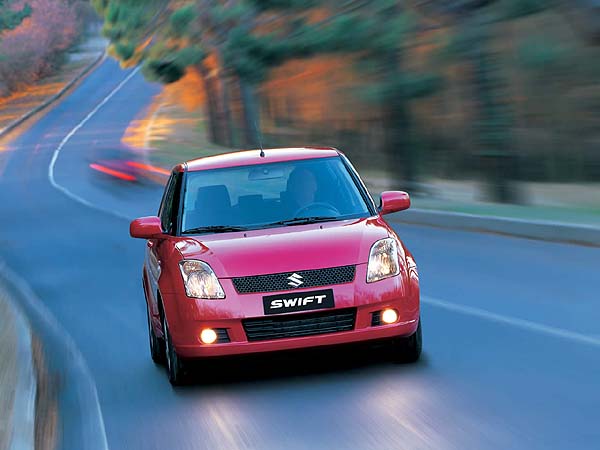
car pic from www.dancewithshadows.com

Wednesday, August 16, 2006

Fast Company Blogjam

Was invited to participate in Fast Company's Blogjam. This is what I posted.

And yes, I did see Kabhi Alvida Na Kehna and have a whole lot to say about it. I won't be reviewing though - enough of you have done that already. The benefit of writing about a film 10 days into its release is you can dissect it without worrying that you will 'spoil it' for potential viewers. If you were really keen to see it, you would have - by now.

I'm also delighted with the news of Indra Nooyi being designated CEO of Pepsico. 'Women managers' is one of the subjects I write about on a regular basis - so I have much to say on that front as well.

But first I have to put a six year old to sleep... And it's likely I will fall asleep before she does!

There just isn't enough time in a 24 hour day is there?

Friday, August 11, 2006

Mumbai, Delhi Inexpensive, but for whom !

You've come across the surveys which keep getting published about our cities being the 'cheapest' in the world. From your own experience, you know they aren't really true...

A UBS study published yesterday moved me to write this guest blog for Business Standard.

Wednesday, August 09, 2006

Kabhi Alvida na Kehna - will it be a hit?

"I don't want to see Kabhi Alvida na kehna," said my daughter as the promos played on TV last night. "It has too much rona dhona."

Well, honey, I wasn't planning to take you to see it anyways. But the point is - much of the youth audience seems to share that assessment. Is it my imagination or is KJo trying a little bit harder than usual to get the audience to see his film?

Not only do we have the usual posters, telly teasers and an official 'making of KANK' on NDTV. Youth channels such as MTV and Zee Music have hour long features spread over the week. Suddenly songs like 'Rock n roll soniye' are getting airtime. As if to say - it's not that weepy, there is a fun element as well.

The fact is - for the very first time, Karan Johar is venturing into slightly unfamilar territory. The guy whose films defined feel-good and 'family values' is suddenly dealing with a subject which is very contemporary but will make people uncomfortable.

So what exactly is KANK about?

First of all, let me tell you that contrary to popular belief, KANK is not just about infidelity. It’s not a frivolous tale of just an extra-marital affair. The film delves into the grey areas of all relationships. It also tries to look at the reasons why people get married and also looks at the psyche of those who look for love outside marriage. They don’t have it easy; there is guilt and sadness there too. In a way, KANK is my take on modern human relationships.

But it is a Karan Johar film so...

"It is a human drama with glam and gloss intact but I have tried to keep it real."


In short - we have the KJo 'look' and 'feel' (the songs sound exactly the same! the actors are exactly the same!). But we are working with a subject which is taboo as far as big banner film makers go.

Yes, we once had a Silsila but I think there half the attraction was the real life parallel in the casting - with Amitabh, Jaya Bachchan and Rekha in the lead roles. And there, the folks having the affair realised 'what we are doing is wrong' and went back to their original spouses.

Is that what will happen in KANK? From what is being said by both SRK and KJo in interviews, I think the film plans to go further. And that is why the makers of this film are scared to death.

As Anupama Chopra recently wrote in NYT in a piece titled "Sex, Turmoil, Infidelity, Divorce: That's Bollywood?" :

"LEAVE my son," a dying man tells his daughter-in-law from a hospital bed. "You don't love him. By staying with him you are denying him of someone else's love and yourself of true love. These unfulfilled relationships won't make anyone happy."

Amitabh says this after he stumbles upon Rani Mukherji nuzzling Shahrukh Khan - both happen to be married to other people.

This is wholly logical but the trouble is how do you provide a 'happy ending'? In previous films KJo has resolved triangles by killing off one of the spokes (Rani in KKHH, SRK in K2H2). Unfortunately, killing off two people is a little more difficult and difficult for the audience to swallow.

You can't have a take on modern relationships which goes - strap up the other two spouses into one car and hope they either fall in love with each other or have an accident.

Here's what I think will happen: SRK and Rani will leave their marriages - and the movie will also show Abhishek and Rani finding love elsewhere (not with each other), after a period of time. In typical K Jo style, the whole story will probably be narrated as a flashback.

"Mohabbat aur maut - donon bin bulaye mehmaan hote hain..." goes one of the dialogues in the film. Whether this film will live or die at the box office is the big question.

The answer lies in SRK's own words: "I was embarrassed doing some scenes of the film. I am not a prude but I found it odd that I sleep with someone else's wife in the film. I felt shy doing them (the scenes) and I blushed while saying certain dialogues..."

If that's how we felt doing the film - you can imagine the effect of watching it on the typical middle class Indian. Who wants to go to the movies and come out feeling disturbed/ asking uncomfortable questions...

For all these reasons I think KANK will do reasonably well - recover its money - but not be a superhit. That distinction will go to Munnabhai Lagey Raho - whose music, trailers and promos promise a laugh riot, just like the original.

But all said and done, it's good to see KJo try his hand at a theme which is different and relevant to modern India. How different and relevant... in 48 hours we shall find out!

Monday, August 07, 2006

Lost in Lebanon

The Indian embassy in Beirut has an unusual problem on its hands, says the Hindustan Times.

While the last of the 2,000 Indian evacuees left by naval ship on July 26, there’s been a steady stream of Indians turning up at the embassy after that. The problem: most of them are illegal immigrants with no visas. Many don’t even have a passport or a photocopy of any proof of identity.

And, had the situation not been so bad in Beirut, they would never have come forward. The fact is, there are thousands of such illegal immigrants from India across Europe and America. Even as the India growth story is attracting foreign investors and talent—and India is supposed to be where the action is—the lure of going abroad at any cost remains strong.

Who are these immigrants? The poor—from Bihar and UP migrate within India to Mumbai, Delhi, Punjab. From Punjab—which is one of the richest states of India, they dream of migrating abroad. Singer Rabbi Shergill sums up the story in his song Jugni

Jugni ja varhi Punjab
Jithe parhe likhe bekaar
Vech Zameena Javan Bahar
Uthey maran jhadu
Uthey gori len viyah
Pichay tabbar take rah
Veer meriya ve Jugni kehndi aa
Ek Navin Udari Lehndi aa


(Jugni blazed into Punjab
Where the educated are unemployed
Selling off their lands and going abroad
Where they sweep floors
Where they marry a white girl
Back home the family awaits their return…)

In the land of ‘milk and honey’, the milk isn’t creamy enough and the honey not sweet enough for the average young person. Almost every family has a relative or two abroad—who bring back tales and pictorial evidence of a better life. And so, people are willing to take the risk.

Even if you end up sweeping floors… the floors there are cleaner, you see!

Passing them by
The fact is that there are more opportunities today —but only for certain kinds of people. Those who are either very entrepreneurial, or those who have earned degrees which are in demand. The former seek out opportunities, employers seek the latter out.

But the vast majority of people — the average Jais and Veerus — don’t fall in either category. The option before them is to till the land —like their forefathers or work in a chhota mota capacity somewhere. In this dictionary, the ‘MBA’ acquires a whole new meaning— ‘Mera Beta Abroad’.

There is a whole industry to cater to this aspiration. No, they don’t teach you how to crack GRE or TOEFL. Theirs is a simple DHL style delivery business: getting you to your destination. And it’s apparently a Rs 1,000-crore industry.

A report in The Tribune some years ago noted that 10-20,000 able bodied youth from Punjab pay between Rs 2.5 to 10 lakh to gain ‘safe passage’ abroad. Lebanon is apparently one of the ‘softer’ countries, where getting visas is not a big problem. And that, it seems is where the actual racket starts:

The prospective candidates, carrying only rucksacks or backpacks, endure squalid travelling conditions on their way to their destinations. At times they have to crisscross the countryside at night, through snowclad hills and hostile terrain. They even cross rivers and channels at the risk of getting swept away by strong currents. Some may get attacked by wild animals. They survive on just a few pieces of dry bread, some tea and water…

Once in a while you hear of a boat tragedy—taking with it stowaways to a watery grave. Or a sad case like the 58 Chinese illegal immigrants who suffocated in the back of a truck on their way to Britain. But more often than not, the ‘delivery’ is completed—Germany, Greece, Italy and Austria are some of the favoured countries.

The immigrant manages to find some very basic employment, pick up the local language and if lucky to be fair skinned, even pass off as a local. In France, I met one such boy in a grocery store. I thought he was Algerian or maybe Italian. Overhearing my husband and I speaking in Hindi, he sidled up to us and whispered, “Yahan se mat kharido… It’s a day-and-night shop… everything here is more expensive.”

The boy spoke fluent French, of course. But I’m sure he was being paid below minimum wage.

When governments ask what can we do to curb illegal immigration the answer is nothing—because there will always be demand for labour which is willing to be exploited. Just like Bangladeshis are flocking to India and getting employment—because they are willing to work at even lower rates than our already lowly paid labour.

So jobs may be shifting to India, but there will always be enough Indians willing to shift for jobs. Until bombs start raining from the skies and suddenly—you would do anything to get home.

(This column originally appeared on www.sify.com)

Saturday, August 05, 2006

The Attitude Earthquake hits India

In a week's time the car population of Mumbai will increase by one. I will be responsible for it. Yes I know I recently wrote about the merits of car pooling but guess what - I have been car pooling for several years now. With my husband.

Times have changed and so have our schedules. After spending a small fortune on travelling in sadly maintained taxis driven by people who never ever have change, I decided to spend a bigger fortune and just buy another car.

Anyways, this post is not about justifying why I am buying a car but about a surreal experience I had at the Ford showroom while buying it. There I am, furrowing my brow over finance discount, dealer discount and all that jazz when I hear the salesman tell a prospective customer:

"Sir, if you drive everyday then go for Fiesta - it's more comfortable. If you drive once a week take Ikon..."

The 'customer' is this stringy 18 year old kid. Actually there are 3 of them - 1 boy and 2 girls, all pretty grungy and look like they've just escaped from college.

I ask the lady who's assisting me,"Do kids like this come in often?" I mean sure they probably do - but for the dealership to take them so seriously is kind of a shocker.

"Yeah," she replies,"Some just come for timepass but others come back with their parents and actually buy the car.." I'm guessing officially it's for 'family' use but in all cases with generous rights for the kid who's taken the trouble of doing so much R & D.

I don't know why this should shock me, really. Many of my college-age cousins in Delhi get to use the car - but beat up Maruti 800s or at best a Santro. But times are changing and more and more parents want their kids to have 'the best'. Whether it's a car or education abroad...

For me, buying a car that costs over six lakhs is a big deal - even today. I wonder what will be a big deal for the kid I saw in the showroom today, who gets it at age 19. Not that all Indian teens are like him. But there are enough now to wonder, "What will be this generation have to strive for... sweat for... look forward to?"

In this context I think we can draw a parallel with Japan.

What lies ahead
There is a large body of work which has studied the changing consumption and behaviour patterns of Japanese youth - and although circumstances are not exactly same in India, I feel they are quite close. Japan was a country with a strong traditional and family culture. And it went through a phase of rapid economic growth. A paper by Ana M Guy-Yamamoto notes:

The first distinctly 'different' set of Japanese youth were the Shinjinrui which means specifically "New human breed". This term was coined in the 1980s when this generation, at the time in their early twenties, were showing a different set of values in their work and leisure behaviour..."

The shinjinrui rebelled against the culture of being a ‘salaryman’ ie being employed in one company for one’s lifetime. They expressed an image consciousness – leading to the rise of luxury brands. And they indulged in more leisure. These new attitides were fuelled by the fact that Japan was going through a buyoant period, now known as the 'bubble economy'..

A UCLA study concluded that the shinjinrui are characterised by:

1. Individualism, and particularly selfish behavior patterns, in which youth tend to place highest priority on individual benefit or values;

2. A strong predilection toward consumer behavior; and

3. Expressionism, the tendency to insist on presenting oneself and the individual's attachment to such presentations.

To place the shinjinrui in a favorable light, they were the first generation to be fully brought up in an affluent consumer society.


India is currently experiencing a 'shinrinjui' of its own. A whole new generation which has not experienced a world without satellite TV, SMS and shopping malls is now entering the workforce. Those born around 1980 and who are around 25 today still have some memory of the pre-liberalisation India. Those born post 1985 have none at all.

So we are seeing all of the above attitudes - and they are impacting the work culture and life in general. Going by the Japanese experience, the trend would continue for about a decade. Shinjinrui were followed by a 'dankai jr' generation with similar characteristics ("collectivist, trend leaders, preference for known brands"). Why give them a different name at all? Because that's what journalists and consultants are paid to do!

But what happens next is interesting. In the 90s Japan went through an economic slowdown but as the New Yorker notes in a 2002 article: "You wouldn't know that the country is in recession from the way young people spend money".

Because of the recession and the inflation of real-estate prices, many young Japanese continue to live at home well into their twenties; buying clothes is one of the things that living rent-free in a small apartment with your parents permits you to do. One young Japanese curator, Koji Yoshida, explained to me that the phenomenon of the free-spending Japanese youth is a product of paternal guilt.

This kind of indulgence from parents has resulted in new kinds of youth attitudes. For example, the otaku. Otaku originally referred to a category of young Japanese men who were fixated on manga but now means "being focussed and almost obsessed with something you like." The word is often used to describe someone with a fanatical interest in computers or fashion.

And fashion for many means 'pursuing right T-shirt or cap ... with a kind of dogged intensity'. Young people are willing to pay 400 dollars for a limited edition sweatshirt which is 'in' at the moment. The money? Comes from parents or from temp jobs which have become popular for two reasons
a) because they choose to remain independent
b) because companies aren't hiring permanent workers.

The Indian context
So are we looking at a future when Indian kids will spend their time and their parent's money obsessing about buying the new bling thing even as they hop from one job to the next in search of enough excitement to make attending office seem like bungee jumping?

Well yes and no. Unlike Japan where 'poverty' is non existent, India has many social strata. The underprivileged and the middle class will continue to have fire in the belly - they will aim to work hard, crack exams, get good jobs. This lot will remain slightly conservative in its consumption pattern - be label conscious but not price-blind.

However in their approach to work they are already (and will continue to be) very demanding, individualistic and restless. Tolerance to criticism or work not upto their liking is low - that's already clear as companies struggle with attrition. These folks don't have the luxury of not working, but there are so many jobs available that they have no incentive to suppress their true nature. Which is to 'do what I want to do, no compromises.'

But there is also a growing number of young affluents into their 20s who are not sure what they want to do. And parents are indulgent enough to allow them this luxury. In Japan they are referred to as 'parasite singles' as they continue to remain dependent on their parents for sustenance, and live in their home.

The emergence of 'parasite singles' can be seen as casting a shadow over the Japanese labour market for young people as well. Since parasite singles do not face financial difficulties, they do not look for jobs with high wages, treating work as something akin to a “hobby.” Because of this attitude, if they find their job uncongenial, they immediately give it up. The resulting unemployment of young people is a “luxury unemployment” that does not involve real financial necessity. To them, work is a discretionary pastime, or a means of earning pocket money.

In India, I think it’s slightly different. We would never label someone who stayed at home as a parasite single… But there is an attitude of ‘hobby employment’ among those who can afford it. A group of young people who is constantly looking for 'experiences'. Six months here, 1 year there - collecting bits and
pieces to stick on a resume to make it look eclectic and interesting.


When the parent starts wondering where this will all lead, the kid buys a litle more time by going abroad to study. Or finally agrees to join the family business - which is why he/ she could fool around in the first place.

Ultimately this would lead to a few geniuses like Farhan Akhtar - he just sat home watching videos for two whole years after college. And then went on to make Dil Chahta Hai. But there will also be a bunch of confused souls who will ping pong between extremes of hedonism and spirituality in a desperate search for some meaning in life.

As Japanese novelist Ryu Murakami noted in Time magazine in the year 2000.

By the 1970s, we had already achieved the national goal. We had worked hard to restore the country from the ruins of World War II, develop the economy and build a modern technological state. When that great goal was attained, we lost much of the motivating force that had knit the nation so tightly together. Affluent Japanese do not know what kind of lifestyle to take up now. That uncertainty has pulled people further apart and caused a whole raft of social problems...

In India we do have a balancing factor. We have the motivating force of making this country a great one. Previous generations were cynical and felt helpless. The current one is aware, interested but mostly self obsessed.

I expect that the next generation – those born after 1995 will be far less enamoured by the materialism which fascinates this one. We are seeing some signs of young people already meandering into the path of nation building. Like the folks at Bharat Uday Mission. With the right kind of impetus and leadership we will see many more.

Of course someone needs to coin cool names for all these groups of people - like the Japanese have. Offhand I though of one - 'aaraamkhor' for the parasite single. Nah, sounds good - not descriptive enough. But you get the idea - and can probably come up with better ones :)

Bottomline: Individualism is a natural human trait. We suppress it out of economic or emotional necessity. But when those needs are taken care of - especially the economic ones - it rears its hard nosed head and disrupts the carefully woven fabric of society.

It takes time while the old fabric is torn up and fashioned into a new garment. And for a while, people will walk around looking like they have no clothes at all... but the human race is adaptable and eventually we adjust.

Just like I am adjusting to a 19 year old driving around in a Ford Fiesta. And the realisation that my daughter may someday expect me to buy her one...

Tuesday, August 01, 2006

USA Today on Arindam Chaudhuri's 'article'

Arun Bhat sent me a link to this piece in USA Today on folks who pass off other people's articles/ columns as their own on blogs/ websites. Del Jones observes..

The Internet is becoming a cesspool of plagiarism.

Steve McKee, a partner at Albuquerque advertising agency McKee Wallwork Cleveland, found that out in June after he wrote his monthly column for BusinessWeek.com.

The column, entitled "Five Words Never to Use in an Ad," was one of his more popular pieces. A search revealed that 36 blogs had picked it up and posted it to their sites, something that is usually considered to be fair use in the blogosphere. However, to McKee's annoyance, 13 of those took credit for writing it as their original prose.

"They're like cockroaches," McKee says. "Ideas are our assets, and it's frustrating when people take them from you without shame."


I fully agree. I've had some of my writing used by bloggers and little known websites without attribution or permission. It really sucks.

But wait, the USA Today article gets more interesting:

A July 3 column written for BusinessWeek by former General Electric CEO Jack Welch and his wife, Suzy, was posted on the Indian Institute of Planning and Management (IIPM) site from New Delhi. There was no attribution to either BusinessWeek or the Welches, only a photo that appeared with the column of professor Arindam Chaudhuri, a business guru and best-selling author in India who works for IIPM.

When USA TODAY tried to contact Chaudhuri by e-mail on July 21, the e-mail was forwarded to Naveen Chamoli, dean of IIPM's Centre for Planning and Entrepreneurship. Chamoli e-mailed back saying that Chaudhuri was traveling, inaccessible and had nothing to do with the Welch column being posted beneath his photo.

Chamoli said in his e-mail that IIPM has rights to the Welch column through the New York Times News Service/Syndicate. Chamoli said in a subsequent e-mail that a Welch byline was added after the USA TODAY inquiry because, "others could be confused."

Jack and Suzy Welch, on vacation, had no comment.


All I can say is, while the internet enables plagiarism, it also makes it easy to identify a plagiarist. Someone, somewhere generally notices and tips off the original author. To fayda kya hua? Apni izzat mitti mein milane waali baat hai...

Sunday, July 30, 2006

The Marriage Market

A beautiful young lady I know is getting married in December. She was a topper throughout her school life, attended one of the best colleges in Delhi and I definitely thought she would make it through CAT.

But after 2 unsuccessful attempts and a couple of timepass BPO jobs she has - much to the relief of the parents - agreed to 'settle down'. "The boy is from a very renowned family in Amritsar", her mother beamed, genuinely happy, when I met her at a family wedding last week. He is also, I am told, tall, fair and good looking -"aur hamein kya chahiye".

"Frankly, I am happy uska MBA nahin hua,"the mom confides. "It's very difficult to manage a career and family you know." I wonder whether the girl feels the same way. "Abhi to woh job kar rahi hai... but just for a few months. Baad mein woh thodi job karwayenge."

Hmm. To kya karwayenge I want to ask. Renowned families in Amritsar don't expect bahus to cook and clean. So the girl can hope to 'live like a queen'. Visit the parlour twice a week, socialise, shop and sit pretty. Waiting to brighten up the husband's evening when he gets home. Perhaps go to the club, or on long drives and weekends to Kasauli.

A year or two of this mauj masti and then she will be in the 'family way'. Husband will get busy with his factory and she with the kids. Nothing wrong in all this, of course. But is it really a choice she is making - or a life she is accepting because it's what the parents want? The path of least resistance, a comfortable existance.

Preserving the status quo...

Conditioning Counts
I am not writing this from a rabid feminist point of view which says all women must be highly ambitious and aspire to be CEOS. I am simply making an observation: that no doubt women have come far... but.

But there are enough women out there who are still brought up to believe 'marriage is everything'. Go ahead, do an MBA but you know, you don't have to work. In fact some parents go so far as to forbid their bschooled daughters from working.

One such girl - a niece - is currently cooling her heels in her hometown in U.P. It took a lot of convincing but her parents let her go and do an MBA from Pune. When her father asked me what I thought of XYZ small time institute I was about to say, "She can do better than that. Let her try for CAT again next year..."

But the girl called and begged,"Aap please aisa mat kehna. Nahin to isi saal meri shaadi ho jaayegi!". So she went ahead, but on the understanding that she was going to study for knowledge sake - and would not take up a job.

I think what tipped the scales in favour of further education was this: "Aajkal sab padhi likhi ladki chahte hain.. MBA ladke MBA ladki chahte hain".

Now, over a year after graduating my niece is twiddling her thumbs, waiting for her parents to find a suitable guy. Horror of horrors, she is a 'manglik' and it seems matching horoscopes is a must on the arranged marriage circuit.

Is she unhappy? Desperately. She could walk out and lead her own life - but she isn't that type. So she waits, and hopes that destiny will be kind. That she will get an undertanding guy who will 'let' her work. Or if not work, at least give space in other ways.

Friends who got married while she was away have but one thing to say. It's luck, pure and simple.

The 'happy' ones are those whose mother in laws don't nag them about waking up early. They get to roam around at home in their 'nighty', watch serials with the saas, go out shopping and for kitty parties. Their husbands are jolly souls who like to go our for dinners and movies. And again - importantly - mother in law does not mind.

The unlucky ones have the mother in laws you see in soap operas. There's one who insists the bahu wear only saris. She monitors how many telephone calls are made and encourages her own daughter to use bhabhi's make up and jewellery. The girl is an MBA but of course, working is out of the question. The husband is caught between mom and wife and prefers to stay on mataji's side.

"It's true, I'm not making all this up!" insists my niece.

Classified evidence
A quick scan of the matrimonial ads is revealing. I check out this morning's Hindustan Times which is a good reflection the Delhi/ UP/ Punjab mindset. Here are some samples under 'Agarwals' ...

A 25 year old under 'grooms wanted' is described as : "fair, beautiful, exceptionally talented, convent educated, interior Architect from best college in India." Whatever an 'interior architect' is! "Presently working only for her passion in Arts and Architecture".

Yaane ki worry not, hamaari ladki shaadi ke baad job nahin karegi.

All girls are of course described as slim and fair but this particular ad really takes the cake!

"Medico match for Garg girl 5'5" Oct 1981, very fair, smart, sharp featured, slim, extra beautiful (rare in Aggarwals) MBBS, DNS entrance cleared..."

However it's interesting to note that a number of the ads do mention girls with their qualifications (down to specific institutes eg MBA - Symbiosis), and a few even mention salaries. Which seems to indicate the girl intends to continue working after marriage.

But whereas 7 out of 10 boys I picked as a random sample mention salary, only 3 out of 20 girls had advertised theirs. Another 5 out of the 20 mentioned 'working girl' or 'with top company/ MNC'. 5 of the 20 ads mentioned a qualification like MBA or MCA but did not elaborate whether the girl was working at all.

One specifically mentioned 'smart fair homely MBA'.

Da Matri Code
In the world of matrimonial advertising I think these are distinct segments and codewords:

a) Girl with qualification + salary/ company working for: "Career oriented"
Will insist on working after marriage, will not play the traditional bahu role. "Bach ke rehna". Only for the strong at heart and those willing to help change the diapers. Dowry ka to naam bhi mat lena!

b) Girl who is qualified and 'working', but no salary mentioned: "Flexible"
Will work if the boy's family is ok with it, open to leaving it if required. In other words someone who will adjust and always accord the husband and his job the first priority. But she's not a pushover - dowry for her is a dirty word. So the Ford Ikon the boy's family is expecting needs to be packaged as a 'gift' that is being given to beti out of pure love.

c) Girl who is qualified/ from a reputed college but no detail about whether she is working: "Housewife material"
But will make a more presentable and interesting companion than the BA pass of yore. Will make a good mother, as you see educated mothers are very important today. Of course, may not be as 'homely' as mummyji might want, and this may create conflict in time to come.

d) The rest: "Born to be Mrs"
Girls who never aspired to do anything more than marry and settle down. The fairness and beauty of the girl are her prime assets. Family background and how much the parents are willing to spend, a close second.

Of course nothing 'works out' as we plan in life. There's a good chance that 5 years from now "Career oriented" will have a baby, mellow down and altogether give up her job.

It might be "flexible" who actually becomes a career woman - because her husband is supportive. Or, the family needs two incomes to afford a swanky 3 bedroom house in Guragaon.

And "housewife" or "born to be Mrs" may well put their interior decoration/ fashion designing/ dietician course to good use. And become entrepreneurs in their own right!

But the matrimonial ad reflects the present - aagey ki guarantee kaun le sakta hai...

A reflection of social trends
Actually, someone could easily do a PhD based on matrimonial advertising - how it's changed over the years and what that says about Indian society.

Even how the advertising in Hindustan Times published from Delhi and The Times of India (Mumbai edition) shows two distinctly different cultures.

The HT ads clearly reflect the 'north Indian mindset'. First of all, there are 8 whole broadsheet pages devoted to matrimonials. Poor TOI has just 4 (that too interrupted by inane 'articles' like "Who wants to marry Himesh Reshammiya'?)

Well I think there are 2-3 possible reasons for that quantitative difference
a) More people in the north have arranged marriages

b) It could also be that more young people up north rely on their families to find a match - and the families still prefer to advertise in newspapers. Whereas in say, Mumbai, more young people might be registering on portals like shaadi.com and looking for a girl/ guy themselves.

In fact Times themselves have a portal www.timesmatri.com which might be cannibalising some of their print advertising!

But the difference between HT and TOI goes far beyond mere 'quantity'.

The HT ads - in true Punjabi style - are loud, garish and designed to attract attention. The richer the family, the bigger and more violently coloured the display ad. Choose from hot pink, green, lemon yellow, ochre and even violet!

The HT ads use different wordings. "High status" and "reputed family" appear in every 3rd or 4th ad. There are several references to "decent marriage", some specify "very decent marriage".

I'm guessing 'decent' means shaadi in 3 star + Santro car, while 'very decent' means 5 star + Skoda. Indecent, as it might seem to the likes of me!

Several ads mention the term 'NM'. At first I was surprised that so many Narsee Monjee graduates would be advertising but then I realised it actually stands for 'Non Manglik'. Words like 'convented' and gori/ v gori also appear far more often in HT.

TOI by contrast has many more ads referring to 'cultured' family. You're also more likely to see words like affluent and cosmopolitan. In fact TOI ads starts its listings with a section called 'Cosmopolitan' whereas HT starts with the caste based A for Agarwal.

Interestingly, many more ads in TOI than HT mention 'caste no bar'. However in reality what that means is say we are Agarwals, we will also consider Brahmins and Punjabis if the boy/ girl is really well qualified/ attractive...

None of the ads in TOI mention terms like 'decent marriage', I think that is due to a Times of India policy many years ago - if I remember correctly - to take a stand against dowry. Of course just because it is not said, does not mean it is... not in the picture. And TOI does have its share of ads for 'convented, fair, slim' (think: Aishwarya Rai) types.

Still, I find the TOI matrimonial ads more progressive and varied in nature -of course reflecting the composition of Mumbai city itself.

Admittedly my 'research' is unscientific but so is this whole marriage business. Where minds may never get a chance to meet - unless horoscopes and degrees first match.

Saturday, July 29, 2006

Citibank's 'EMI' offer

Banking is an old world industry that has embraced new technology whole heartedly. The revolution started with ATMs, then came net banking and now banks have become cell-savvy.

This is mostly a good thing. ICICI Bank will sms you when a cheque is cleared and your account gets credited. There are other great things you can do under 'mobile banking services' including balance update, cheque book request and details of last 5 transactions, among others.

Then there are the credit card companies. Citibank will alert you if your credit card bill is due and still uncleared. And within minutes of making a high value transaction, the Citi call centre in Chennai will ring and confirm the owner has used the card. At least in case of a card being used thus for the very first time - thus reducing the possibility of fraud.

But there can be too much of a good thing. The other day, I made a purchase of a mere Rs 3046 and a couple of days later got this sms: 'Convert your purchase into 12 EMIs. EMI : Rs 279; Fee Rs 150. Diminishing Int. Rate: 18%. Reply 'DEMI' to convert."

Sounds really desperate to me - on the part of Citibank. You spam all your customers in the hope that a few are dumb enough or poor enough to respond to a dud offer. I guess even if the acceptance rate is 0.1 % - because all you need is a pea brain and a single SMS - the bank makes a ton of cash.

But something tells me there are enough such pea brains...

Credit card 'culture'
Like a good number of credit card users in India I use mine as a convenience and pay off the bill in full every month. But that's not good news for banks. They're keen to create a client base of 'revolvers' who pay just the minimum balance every month and interest on the rest. And they seem to be succeeding.

A nearly 5 year old cover story in Business Today estimates that 35-40% of card holders in India now revolve their credit.

Worse (or better, depending on how you look at it), research conducted by the Credit Card & Management Consultancy (CCMC) shows that the proportion of credit card holders revolving credit has increased sharply from 25-30 per cent in 2000 to 35-40 per cent this year.

I'm guessing that figure might be up because in these 5 years a large number of young people have joined the workforce. And they're more careless about reading the fine print than the generation before them. Plus, the 'gotta have it now' culture has only gotten stronger.

Of course we're still better off than say Australia - where only 25% of card holders pay off their card bills every month. Or America, where 115 million people revolve their credit and the average household is $8000 in debt.

The total number of credit cards in India is still just 18 million, which is no 3 in Asia but far behind Japan (85 million cards) and Korea (50 million cards). The very fact that we have 47 million debit card holders vs 18 million credit card holders in India shows we're still resisting the lure of building castles on '18% diminishing int rate'.

But I still think Citibank should not spam me- or any other customers - with 'EMI' offers. Unless I specifically opt in for them. Yeh to gale padne waali baat hai. Kindly let the air we breathe remain interest-free!

Friday, July 28, 2006

Cool Pool

A new SMS-based carpool service may reduce Mumbai’s traffic woes
- Rashmi Bansal

(this piece appeared in Businessworld, issue dt July 31, 2006)

AFTER the recent hike in petrol prices, Hema Deora, wife of petroleum minister Murli Deora, advocated: "People driving long distances should try carpooling." Coming from a person who doesn’t use them herself, this sounds a little like Marie Antoinette on the virtues of cake. Carpools are good for your city — but best used by someone else.

But seriously, traffic snarls and rising fuel costs have made the average car owner open to the idea of a shared ride. The trouble is finding someone to share the ride with. Someone whose schedule matches yours and will not intrude into your space. To enable this, motoring portal www.indimoto.com recently launched free carpool classifieds. However, there’s more to carpooling than just matching schedules. Here’s why.

Normally, people opt out of public transport because they want a vehicle at their beck and call. Hooking up with a daily carpool partner means adjustment, and that’s something auto fiends resent. So, is there a practical solution to the too-many-cars-on-the-road problem? The Mumbai Environmental Social Network (MESN) believes there is.

MESN is a public policy think tank committed to enable Mumbai’s efforts at a better environment. But it is doing more than just thinking. MESN will launch Koolpool, India’s first SMS-based carpooling system, in the next two months. Says Rishi Aggarwal, COO, MESN: “There will be two kinds of users: ride givers, who take their cars on the network and ride seekers, who prefer to leave their cars behind.”

An SMS- as well as web-based interface would allow Ride Givers and Ride Seekers to hook up with each other on a dynamic basis — each day you could get a ride with a different person in a different car! “There are pre-defined routes created by Koolpool and by the members, each with a unique route number and pool stops,” explains Aggarwal.

The economics of it works through a prepaid account. Ride givers earn 25 fuel points for every person picked up. These can be redeemed in multiples of 500 for fuel at HPCL petrol pumps. The prepaid account of the ride seeker gets debited when a member confirms via SMS that he or she has joined a pool.

Currently, Koolpool is building its member base. “Everybody is enthusiastic about it. But it takes time to convert enthusiasm to actual membership,” says Aggarwal. MESN is focusing on 40 corporates in Mumbai city. So far, Philips, JP Morgan, Lintas, Castrol and HLL have shown interest.

The locality that has shown most interest is Andheri (East), which faces some of the worst traffic problems in Mumbai. Focusing on corporates also reduces the problem of ‘who am I sharing my ride with’, which could be a concern if the system were open to everybody from day one. Photo ID cards will be issued as well.

There are successful working models abroad, such as www.carpoolworld.co.uk (with 600,000 registered members across Europe), US-based www.carpoolworld.com and www.greenride.com. But none of them seem to be as flexible as Koolpool, which even allows ride seekers to share a taxi or an auto.

“Koolpool has been developed indigenously,” says Ashok Datar, chairman, MESN. The idea was conceived by Joshua D’Souza, chief executive, MESN, who met his wife through an SMS-based dating service. A similar system for a carpool service may work, he thought. But the idea, conceived in 2003, took close to three years to bear fruit. “indiatimes was sold to the idea and enabled the backend,” says Datar. Thus, without spending any money, Joshua had the system ready by 2005. In MESN, he found a platform to turn the prototype into reality.

Koolpool estimates that if 6,500 vehicles pick one member for an average 15 km a day on two trips for 22 days a month for a year, it would reduce 51.48 million km of travel per annum. But they’re not going to sell you carpooling as a way to ‘save the world’. They want to make it work for you.

Monday, July 24, 2006

She came, she smiled, she fainted

Miss Puerto Rico is crowned Miss Universe 2006. Ten minutes later she faints, because her dress was too tight.

A barrelful of laughs is not the word Donald Trump would like viewers to use to describe the Miss Universe pageant whose franchise he owns. But that’s exactly what it was.

Who watches such shows? Only idiots like me, who tuned in to Star World expecting to see Frasier. Only to discover Miss Universe 2006 was Monday night comedy. Just a slightly different form of it.

Where does one begin? Miss USA’s purple chiffon gown inspired by a wedding cake, perhaps? The poor girl looked like she would fall flat on her face, any moment.

Then there was the compere’s cheery assertion, “One girl’s life will change tonight!” Never mind if no one remembers the name of last year’s winner…

But, as expected, the question answer round provided the most laughs. Miss Japan is asked, “Which event in world history would you like to change?”. She confidently declares: “Men and women are the same… except men have more physical strength”…

Yeah, so she didn’t answer the question but obviously that does not matter. The girl with the best cosmetic dentist and clingiest outfit won the crown. When asked to define ‘success’ she rattled off a 5 sentence long answer in Spanish which, translated into English means “Gimme that crown, buster!”

Miss Japan – the historically challenged young lady – merely came in second. And Miss Puerto Rico did faint. I’m not making that up! There she is, getting carried away...

"She got dizzy. It's very hot up here. Her dress is tight - as you could see it was beaded and heavy," explained the organisers. She's had 'plenty to eat today' they further clarified...

Perhaps that accounts for the tightness of the dress! :)

The politics of the crown
This year, in a desperate attempt to revive the popularity of the pageant, the contest was held in Los Angeles’ Shrine Auditorium. The same venue as the coveted Oscars.

As we all know where the contest is held has a lot to do with who wins it. Ideally, Miss USA would have won – but that would have appeared too blatant. So she merely makes it to the top 5. Miss Puerto Rico is a fine substitute. Short of official recognition as a state, it is United States territory.

But Puerto Rico is ‘Latin’ enough to satisfy the Hispanic and South American audience as well. Two birds killed with one stone!

It’s no coincidence that Miss Japan won 1st runner up and Miss Switzerland came in third. The signal, clearly, is to give the pageant a ‘First World’ sheen once again.

All those who fret about India not making it – coldly examine the statistics. Miss Universe is more of an American pageant. The 3 countries which have won the maximum number of titles are USA (7), Puerto Rico (5) and Venezuela (3).

Miss World, on the other hand, is a British pageant. The top three on this list are India and Venezuela (5 titles each) and the United Kingdom (4 titles).

The honey is where the money is. I don’t know what Venezuelan mamas mix into their chica’s Farex but for the other girls, clearly nationality does play a role in tipping the scales.

I’m sure Steven Levitt of Freakonomics fame will one day oblige with a more detailed analysis! And one day, we may even have a Miss Universe contestant write a racy book on what really happens behind the scenes at such pageants.

But the good news is, we have a Miss India contestant who’s done that already! Ira Trivedi, a contestant at Miss India 2004 has just published an amusing and altogether convincing account of the madness that goes behind the method in the desi leg of the pageant.

The book is called "What would you do to save the world?" Title accha hai na? The book's no masterpiece but a good read for sure.

Just finished it yesterday, which is one of the excuses I have for pausing to actually watch the Miss Universe pageant. I feel like an insider, now that I am familiar with terms such as 'quarter smiles', 'half smiles' and 'full smiles'. Not to mention the joys of 'stick-on bras'...

A separate post is required to do justice - and one shall shortly follow!

Thursday, July 20, 2006

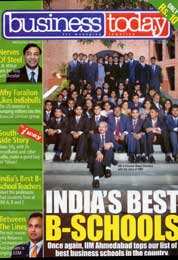
Business Today B school rankings 2006

Several of you wanted to know my views on the Business Today b school rankings which were published recently. Well, here they are.

The piece is titled 'The Trouble with B School Rankings' and has been published in the latest issue of JAM magazine.

In a nutshell, I think it's a case of applying a methodology best suited for widely advertised FMCG products to educational institutes, whose excellence must be measured by completely different parameters.

I wish more discretion had been used, because these ranking surveys may mean nothing to the creamy end of the student layer. But they can and do mislead those with limited access to credible information...

Tuesday, July 18, 2006

Testing...

Four different journalists have called to ask me - can you access blogspot. Several ISPs have apparently blocked access to the domain.

The answer is yes, and no. From my home connection (iqara.net), I can't access any blogspot domains. From office, it still works on one connection and not from the other.

My guess is that some official issued a directive to ban X, Y and Z blogs for being 'anti national' (a reporter told me that specific blogs are named on the list). In doing so they did not realise that millions of blogs which are sub domains of blogspot would also get blocked. Perhaps ISPs do not have the technology to block subdomains -or they're taking the easy way out.

My thinking is - would it not be easier to simply contact Google, which owns blogspot, and request them to do the needful. I know they believe in extreme freedom of speech but there is a 'flag' system to mark out objectionable content. So in some cases I guess they do censor blogs.

Now let me try and post this and see what happens!

Friday, July 14, 2006

It's hard being the boss, too!

'How bad is your boss' asks Shyamal Majumdar, writing in Business Standard

From his piece, I learn there is a 'bad boss' contest running on www.workingamerica.org and it seems there is no shortage of horror stories on the subject.

There seem to be a huge number of bosses out there who either take all the credit for themselves, or who think you have no life outside work, or who give out too many tasks with impossible and constantly changing deadlines. There are stories about bosses who are pathological liars, or control freaks, or someone who has the IQ of an eraser. The boss also seems to be having the spine of a jellyfish — someone who would never stand up for you.


Shyamal observes that some of these comments are obviously exaggerated, it’s a fact that there are enough bosses who can make your life into a Dilbert strip.
Which is why I guess the 'Hari Sadu' ad by job site naukri.com brings a smile on most people's faces.

Though no organised surveys have been done on this issue, an informal study in India a few years ago found that almost 75 per cent of the employees surveyed identified their boss as a lousy manager.

Well, here's the view from the boss side of the fence. It is neither easy or fun being one. The most difficult lesson I learnt when I set up my own company was how hard it is to go from being an employee to an employer.

But you don't have to go the entrepreneurship route to go through this painful transition. Two, three, max four years into your job you’ll find yourself having to supervise people working under you.

Suddenly it’s not enough to do your own work well – you have to be responsible for their work as well. Many times, it seems, it would be far quicker to do the job yourself. But that’s not the answer.

Mistakes are made. You can’t yell, yet you have to let the person know something went wrong. Or well, you can yell– but then you’d be a bad boss. It seems perfectly unfair – someone else screws up and you have to broach the subject with patience and understanding instead of venting your own anger and frustration.

Being a boss – a good one - requires a great deal of emotional energy. As you rise higher and higher, you just need more and more of it. Remember the old aying ‘lonely at the top’, even in the flattest of organization structures.

There is an ‘Us’ and ‘Them’ pecking order, Upto a point – even as someone’s boss – you are an ‘Us’. At some point your designation, salary and role put you in the bracket of ‘Them’.

Now people are noticing what you wear, how you conduct yourself, gossiping about something you said or did. This is all natural – you were doing it not long ago. But.. it takes some getting used to! And some people just never do.

Organisational issues
As Shyamal notes, part of the ‘bad boss’ problem lies in faulty executive promotion policies. For example, a company promoted its engineers to managerial positions for the wrong reasons, that is, technical competence rather than managerial proficiency…

He goes on to give the example of Microsoft, which has created a separate status scale for its software engineers. The basic idea being that managers gain promotion as they take on more people and greater responsibility, and software engineers gain in status and pay as they demonstrate brilliance.

Well, this should be emulated in just about every profession (the most brilliant writers often make lousy editors because, saddled with admin and production burdens they cease to write - and lose the very passion that brough them into their jobs!)

But, we also need to develop leadership capabilities in people as they rise up the ladder. It’s tempting to believe leaders are born not made but poor behaviour and attitude can be corrected. Not always, but since bad bosses affect everything from individual performance to overall morale – one has to try!

Toxic subordinates
Shyamal notes that behavioural studies have found that bad bosses believe in the following:

The average person dislikes work and will avoid it he/she can;

Therefore, most people must be forced with the threat of punishment to work towards organisational objectives;

The average person prefers to be directed; to avoid responsibility; is relatively unambitious, and wants security, above all else.


In Hindi there is a saying – taali donon haathon se bajti hai. As a boss I would have to say there are also a number of ‘bad’ employees who believe in the following:

My current job is not good enough for me. (But I’m still working here till I get something better!)

My boss is always out to get me (My performance is never the issue)

I am super talented so I am entitled to ___________

Fill in the blank with anything from ‘disregard the boss’ instructions’ to ‘come 2 hours later to work than everyone else’


Jack Welch write about ‘boss haters’ in his book ‘Winning’. These are the people who are cynical about authority and ‘constantly exude low-level negativity towards “the system”... their bosses feel it and return the favour.”

‘Winning’ is replete with advice for people at all rungs of the corporate ladder. For people just starting their careers, a very important tip from Welch:

“I would describe the wy woek-life balance as an old fashioned chit system. People with great performance accumulate chits, which can be traded with flexibility. The more chits you have, the greater your opportunity to work where and how you want.”

In short, no one is ‘entitled’ to anything – you have to earn the trust and respect of your boss, just as he/ she has to earn yours. Far too many young people joining the workforce today aren’t really recognizing this fundamental principle.

Also, if you keep hopping from job to job – because today the environment allows that – you never really accumulate enough of those chits.

The generation gap
A rare article with some insight in ET noted:

Growing up in post-liberalisation India, amid a buoyant economy, with the India story only getting brighter… India’s Generation …have seen few failures and fewer hardships. Disillusionment sets in fast, and the patience threshold is low.

The article quotes the example of a management trainee who came to meet K Ramkumar, HR head of ICICI Bank.

Sir, my boss spoke to me in a language which even my father would not use. I felt very bad. Nobody has ever spoken to me like that. I have always done well in my life,” he said. He wanted to quit. His boss had told him, “You are no good. You have to work hard.”

Tolerance is in short supply today – and a ‘bad’ boss and a tough one are often mistaken. A bad boss is one who – besides being a taskmaster – is one who diminishes you, does not add value to you.

A tough boss is one who may stretch you to the limit. But there is learning and growth in working with that person as well. And of course if you are really lucky – you find a mentor – a boss who actively works to bring out the best in you.

Subroto Bagchi, CEO Mindtree, once wrote a tribute to all the bosses he’d worked with who made him what he is today. If someone were to do a ‘great boss’ contest – they just might be surprised.


.


.

Tuesday, July 11, 2006

A very sad day indeed

It's close to midnight and I am still at the office. But sooner or later, I know I will get home... Unlike the 174 who have already died in the serial bomb blasts that rocked Mumbai earlier this evening.

By the time you read this I am sure the death toll will be far higher.

The television we brought to the office to watch the FIFA World Cup is beaming pictures of mangled railway compartments. And bloodied bodies.

On the roads and the railway tracks, the people of Mumbai are helping each other. The police is doing its best. The wail of ambulance sirens rushing the injured to hospitals can be heard...

My daughter is at home, asleep and oblivious. But there are other children who will wake up to find their world changed forever.

What can one say or do or promise to do in the future that will make that kind of pain go away?

Sunday, July 09, 2006

Corporate - 3 stars

I am a huge fan of the Madhur Bhandarkar school of film making... but Corporate did not really work for me.

The Madhur formula is simple: take a 'strong' female character, provide a peek into a hitherto unseen but interesting world, expose its seamy underbelly. Treat the audience with intelligence; they can live with the fact that a film - like real life - need not have a happy ending.

'Corporate' stays true to all this but fails for two reasons:

1. The world Madhur has chosen to 'depicted is not as mysterious or interesting as the world of bar dancers or Page 3 personalities.

Besides, we've seen power and money hungry businessmen on screen before. And venal politicians for sure. This time they sit in gleaming glass buildings and are outfitted by Allen Solly. But overall the film looks like it was made by putting together 'leftover' ideas and characters from Page 3.

2. The bigger issue is the central character - senior Vice President Nishigandha Dasgupta, played by Bipasha Basu. She starts off as this ambitious, I-can-hold-my-own-in-a-male-dominated-world kind of character. But as time goes by, she wimps out completely in the name of love.

For these reasons I don't think 'Corporate' will be a hugely impactful film - critically or commercially. But it's still worth watching because, yes, it has many good moments. And in sum, it's decently made.

Of course, like a Hollywood production, you'll have to pay a bit of attention to figure out who's who. There are a lot of characters, and kaun kis camp ka hai takes a bit of time to digest.

'Corporate' is about the rivalry between 'Sahgal group of industries' and 'Marwah group of industries'. Both groups are bidding for a PSU which the government has put up for sale. Both woo a creepy looking politician called Gulab Rao who is stupendous in the film.

I loved the way he bellows into his cellphone "I am at a 'charity function'" when he's actually cavorting with item girls :). And the manner in which the tender is rigged feels like it came out of genuine research.

But a lot of other things do not ring true. Do senior VPs meet with secretaries in juice shops to learn of their rival's secrets? Chalo, maybe. But hiring a hooker to access a rival's room and steal data from his laptop? Maybe they should add a module called 'spy vs spy' for MBAs!

The film picks up steam in the second half. Sahgals launch the 'mint based sft drink' that Marwah was planning to. And another dose of 'reality' the pesticide in cola controversy is brought into the picture. The film makes a point about how 'issues' are actually used by business rivals to screw each other. That both media and NGOs can be easily manipulated.

Sahgal (played by Rajat Kapoor) is the suave and suited first-gen entrepreneur, with a more 'professional' management style. But Marwah (Raj Babbar) as the more traditionally rooted businessman is more interesting as a character study. His dependence on a 'bapu' for advice on all personal and professional matters is a nice touch.

Kaykay plays Ritesh, Sahgal's brother in law and Bipasha's love interest. He is required to act angsty and tortured and does that job pretty well. Harsh Chhaya as Sahgal's right hand man is very good. Minissha Lamba - never noticed her before - is rather sweet as a young manager. Lilette Dubey as a high class 'madam' (the kind who goes to the gym and interviews celebrities on TV!) plays her part to perfection.

I wish Madhur had not chosen 'colas' as the product that the two companies went to war for. Because that is a category where 'Sahgals' and 'Marwahs' slugging it out jars you. After all it's only Pepsi vs Coke today - both multinationals.

We do see a 'gora' in the form of a taklu called Steve who is Sahgal's JV partner, but I think the battle could very well have been over some other product where Indian companies reign - like mobile phones.

And this is an important point because Madhur always tries to present a 'slice of life' in his films so we expect less of creative license. I think he chose colas because around the time the script was written the 'pesticide in cola' controversy was at its peak. And so it was convenient.

As per the 'Page 3' formula humour and occassional insight is provided by the office peons and security guards.

"Jo kaam ek aadmi kar sakta hai... jab 50 log table par baith kar karte hain.. aur kharaab karte hain - usey Corporate kehte hain".

Ha ha. Mintzberg would probably agree :)

Wednesday, July 05, 2006

Let them have crumbs

'A rewarding career in hospitality and culinary arts' reads the headline of an ad for a hotel management institute. One of many hundreds which have sprung up all over India.

You would think, yes, there is a huge demand for hotel management professionals. And chefs in particular, looking at the rise of speciality restaurants and their exotic offerings. At truly exotic prices!

I recently met a girl who came to Bombay all the way from Assam because she always wanted to be in the hotel industry. She joined the 'Craft Course in Baking and Confectionary' at Sophia Polytech in Mumbai. This course is 1 year, full time and open to anyone who's completed HSC with 45% marks. But many, like this girl, choose to take it up after graduation.

During that one year you'll learn everything from the science of yeast to the "eight golden rules of recipe balancing". You become well versed with cookies, international desserts, shape cakes and Christmas cakes.

It's little wonder that students are highly regarded in the industry and land internships with prestigious 5 star hotels. Here, they slog from 6 am to 7 pm, training under experienced chefs to create new and varied sweet temptations. "We prepare 9 dessserts a day and don't repeat them for a whole week!"

It's back breaking, physical work although in pleasant and aromatic surroundings. During the trainee period you get paid a stipend of Rs 500 which does not even cover your to and fro travel. If you do well, you may be offered a job - at Rs 45,000 p.a. or Rs 4000 per month!

That's an amount that won't even get you a decent PG in Bombay these days. Unless you share the room with someone!

Well, maybe this is the price you pay to learn the tricks of the trade. The intern sighs and says,"Someone who's worked here 2 years gets Rs 6000... " And this is for a 12 hour shift which could be morning, afternoon or late evening.

This girl plans to pack up her bags, go back home and set up her own cake making business. But the question that bothers me is why - why should the hotel industry be so exploitative?

A single pastry at the hotel cake shop sells for Rs 80 and desserts Rs 200 upwards. Surely if trainees and junior bakers are paid a little more, it won't hurt them. Are they simply not bothered about attrition?

Because the hotel industry is booming in India, but hotel management graduates are on rather unhappy with their prospects. From the non-culinary side, many are joining BPOs and other 'service industries'. Those in the cooking side of things aren't as mobile but veering towards foreign cruise liners or starting their own catering business.

No doubt - if you stick on with a big hotel and make it through the struggle - you will eventually be rewarded. But are young people today willing to wait that long?

On the other hand we have the MBA. Forget final job placements. A student from a prestigious MBA institute would get Rs 12-15,000 p.m. as a summer trainee. And he/ she would spend the two months fooling around with xl worksheets doing an 'industry analysis'.

This girl, who can make the most luscious cakes and desserts (I've had some and can vouch for it!) can't dream of getting Rs 12-15,000 even after 3 years of slog in a 5 star hotel.

Remember how Marie Antoinette once sparked off a revolution with her "Let them eat cake... " statement? Well, someday we may see 'cake labour' rise up and declare, "Let them eat XL sheets!"

pic: from www.gothampastry.com

Tuesday, July 04, 2006

Nirula's to go national...

And about time isn't it? The chain which pioneered the 'peeja' and burger culture in Delhi is finally getting its act together. But now, with the Macs, Pizza Huts and Dominos firmly established - is it too late?

Once upon a time, whenever I visited Delhi, a trip to Nirula's was a cherished ritual. We had 'Open House' and 'New Yorker' in Bombay but they paled in comparison. "Why doesn't Nirula come to Bombay?" I would sigh every time I finished eating there.

Well, Nirula continued to expand in Delhi and in the northern region. But somewhere along the way, things changed. Mention 'Nirula' and my younger cousins would wrinkle their nose and declare,"Ab wahan koi nahin jaata hai".

In short, the young and cool crowd abandoned the eatery, although Nirula's still remained numero uno when it came to ice cream. And legendary for its 'Hot Chocolate Fudge'.

Of course, competition was bound to affect Nirula. But it didn't try hard enough to stay ahead. Nirula broadened its menu to include everything from chhole bhature to Indian meals - which was not a bad idea in itself. But the decor, the menu, the overall brand - all remained frozen in time.

As one kid puts it,"Nirula is the place where you go when you can't agree on where to go...". Another was more blunt and said,"It's the place where fat Punjabi aunties in polyster suits go to pig out". But of course, that would describe just about any fast food restaurant in Delhi!

The bottomline is Nirula's may seem thakela but it still has customers. And more importantly, a lot of goodwill. That's what Malaysian food company Navis Capital Partners has paid Rs 90 crores for. Of course, they know it's not going to be easy...

DNA reports: "The idea is to revive the Nirula's brand and make its presence felt across the country..." Moreover, the takeover also signifies a major revamp of all its outlets in Delhi. "Although we have decided to retain the name, we do plan to spruce up most of the outlets."

The menu will also change but some of the flagship products like the Big Boy Burger will be retained.

I think food is one area where Indian chains can give a run for the money to international chains. Because taste is a huge issue.

Everyone from Mac to Pizza Hut has been struggling to hit the right note. They've had to 'spice' up their menus, add paneer and otherwise adjust to Indian tastebuds. That's where the local guys have an advantage.

Where local chains lack is in systems, scalable models, big advertising budgets and an overall vision of where they want to be, say 10 years from now. With an infusion of capital, there's no reason Nirula's can't bring in the talent and the temperament to overcome those problems. And give the global giants a run for their rupee.

Better late than never... Let a new era of burger/ bhature battles begin!

Monday, July 03, 2006

Women in IT

Women now comprise 25%of the 2 lakh strong employee strength of Indian IT majors like TCS, Wipro, Infosys and Satyam, reports HT. Further Nasscom estimates this ratio will change to 65: 35 by 2007.

That's great, but here's the catch. IT has seen a sudden boom in the last 3 years. Let me take the example of just one company, Infosys.

Infosys employed 10,378 people in 2001-2. This number jumped to 15356 in 2002-3. By 2005 Infosys had 46,196 employees and is looking to hire 25,000 people in the current year.

So we're seeing a massive number of fresh engineering graduates joining IT. Over the last decade the number of girls opting for engineering has risen substantially so no one should be surprised to see them populating IT companies.

That's explains how, within a single year, the % of women in Infosys has risen from 22% to 28%. Similarly, women comprise 24% of the workforce in Wipro and TCS. That's up 55% and 58% respectively from 2004!

So are IT and women really made for each other? Well, it's a virtuous cycle operating. Girls generally prefer Computers/ Electronics as they aim for 'white collar' IT jobs. The existence of these IT jobs may have induced them into the engineering field in the first place.

I mean no longer do you hear parents saying engineering mein ladki kya karegi...

What happens next
So here's the deal: The % of female recruits would be far far higher than 25% at entry level and right upto 5-7 years of experience. It's what happens after that which is the real headache for companies in all industries.

Companies lose women when they:
a) marry and often relocate (read: follow their husbands). That's changing to an extent.
b) have kids and take a break. For many this becomes permanent, even though it was not intended to be so.

Yes, some IT companies have day care centres on campus (or tie ups off campus) but it's not just about the logistics. Given work pressures, even these arrangements are often not enough. What happens when you're working late or have to travel all of a sudden?

And of course, many women choose to opt out because they don't want to 'miss out' on bringing up their children.

I'm sure the industry already faces these issues but will need to really address them head on in the years to come. Narayana Murty himself acknowledged this fact recently.

"IT companies lose too many women from the middle management level to the opt-out revolution, due to family pressures. This is a phenomenon that we need to fight. It has resulted in significant loss to companies," Murthy told a gathering of more than 100 women IT professionals from various companies in Bangalore.


He added that Infosys, through its Infosys Women’s Inclusivity Network, is piloting a telecommuting project for women employees. "People can do part of their work from home using broadband connections. This, however, does not work across levels. Managers need to come to office to attend meetings".

A large number of female employees who joined in the last 3-5 years will soon enter the time-to-have-a-baby stage. It will be interesting to then compare whether IT is able to retain substantially more women than other industries.

Of course, companies will continue to take in lots of women at entry level and hence the overall % of women in the company will be maintained or even go up. But will we ever see a figure like "25%" or even 20% women at middle management level?

As for top management, there are some success stories - Meena Ganesh, CEO, Tesco, Neelam Dhawan, Managing Director, Microsoft India, Asha Goyal, VP, Quality, IBM to name a few.

The question is, will these numbers swell significantly 15 years from now? Are today's female recruits more ambitious and go-getting? And will companies enable them to succeed by chalking out new kinds of career paths??

Hard to say but... I think a real paradigm shift will take more than one generation! Yet, the young woman of today who wishes to make it big in her career has far more opportunities and less obstacles than those who were born a couple of decades before.

It's all about personal choice - and statistics never ever tell that story!

Sunday, July 02, 2006

Professor paraded

Last year, a young girl was violated inside a police chowky at Marine Drive. Public outrage boiled over and in a rare instance of justice not being denied but speedily delivered, Constable Sunil More was convicted for his heinous crime.

This week, another young girl claims to have been violated at the opposite end of Marine Drive. By her professor.

However, in this case the 'crime' is difficult to establish. There is no semen, no torn clothes, no witness. The girl claims the professor made lewd advances. He flatly denies the charge. The college stands by him.

So what does the girl do? She goes to the NSUI and gets 'justice' in another form:

TOI reports: National Students' Union of India (NSUI) supporters on Friday stormed the Wilson College staff-room and dragged biology professor Vilas Athwale to the Gamdevi police station after blackening his face and hanging a garland of chappals around his neck. The act, unprecedented in Mumbai, followed a girl's accusation that Athwale had molested her in college last year.

Looking at an 'elderly uncle' type dragged through the streets does not make a pretty picture. Which is precisely why it made such big news. And raises a deeply ethical dilemma.

In a democracy it is believed that any man is innocent until proven guilty. If Prof Athawale is innocent, then this is a gross injustice.

But what if he is guilty and yet there is no way to 'prove' it? What's more, public humiliation might even serve a larger social purpose. Because 'elderly uncle' type professors behaving in an inappropriate manner with female students is a rampant problem.

It's invisible because victims rarely come forward.

In America, 20 to 30 percent of undergraduate female students claim they've been victims of some form of sexual harassment by at least one of their professors during their undergraduate years.

There are no statistics in India, but I am pretty sure they would be equally high.

The 'truth' is out there
Here is the Wilson story so far. The victim, speaking to DNA recounts the incident which took place in August 2005:

I was standing near the college gate when the vice-principal, Professor Parkar, confiscated my phone. Professor Athawale paid the Rs 200 fine on my behalf and asked me to collect the phone from him the next day. I met him in a passage that is hardly used by students or staff. We were talking when he began moving closer to me and suddenly grabbed my hand, saying ‘I love you… I love you’. I pushed past him and ran away.

I immediately told my parents about the incident. The next day, my father and a family friend met professor Parkar, who defended professor Athawale, saying he was a senior faculty member with impeccable credentials.

After three days, Parkar said that the principal wanted to meet my father. Instead, Professor Bal Nerurkar, from the department of mathematics, and Professor Parkar met my father. Although Professor Athawale never spoke to me again, I came to know that Professor Nerurkar had been circulating nasty rumours about me. They tampered with my attendance and failed me in mathematics to make me appear an insincere student. I approached the Students’ Council in February 2006.


So it can't be said the girl 'did nothing' at the time she claims the incident actually took place. She did, first of all, go home and tell her parents. What could be her motivation for 'making up' such a story?

What's more, she did not press the matter until she obtained a leaving certificate from the college, which makes sense as well.

The political angle
What puts a blot on the case credibility is the involvement of the NSUI. As we all know, 'student' wings of political parties are hardly representatives of students. No student who is actually interested in studies joins ABVP or NSUI.

Real students are worried about jobs, about admissions, about quality of education. They want better facilities, more opportunities, accountability from the system. When was the last time you heard NSUI or ABVP raise their voice and/ or create an impact on such issues?

Granted, a sexual harassment case is a serious issue as well. But is rabble rousing and blackening someone's face the way to 'deal' with it? Because that seems to be the preferred modus operandi.

Instead of lobbying at a policy level to get student issues addressed by their respective parties, the 'youth' wings prefer to pick up an emotive issue or two, create a tamasha and earn a few brownie points with their senior counterparts.

The 'youth' wing thus serves as a kind of training ground for goondaism and other tricks of the trade. Wilson college claims that the NSUI had been pressurising the college to admit a few students, which the management has refused. Hence NSUI has taken up this cause - to malign the institution.

Sadly, that is completely believable. Although it does not mean the student's case may not have merit...

Role of the media
Lastly, one has to wonder about how easy it is to make 'news' today. And how self conscious the police has become in the presence of the media.

Additional police commissioner D Kanakratnam said to the press: "We will not tolerate those who take law into their own hands and we will ensure that Aboli (NSUI leader) is punished for his misdeeds."

But the fact is that this parading of the professor happened under the very eyes of the police. On TV, you could clearly see that the police was practically escorting the crowd instead of breaking it up.

Perhaps they had instructions not to create a lafda after their teargas and lathi charge on students during the anti reservation protest created a major embarassment.

In a rare show of sensitivity, a few TV channels pixellated Prof Athawale's face. However, the newspapers had no such qualms and went ahead published his picture.

So everywhere you look, it's grey and more grey...

New development
And now, another class 12 student of Wilson college has come forward and alleged that she too was sexually harassed by the same professor.

Mumbai Mirror reports: The professor had tried to touch her and other female students while they were in the laboratory. According to her the incidents were frequent but she did not complain to the principal as she was scared of being expelled from college or being failed.

All I can say is, this raises a serious new dimension... The truth can be found, if you look hard enough. The question is, can we hold up to the mirror to ourselves and acknowledge the ugly side of human nature?

Authority figures preying on young students is an ugly reality. Uglier still is everyone being fully aware that X or Y professor is a pervert and yet looking away.

And ugliest of all is the rare case where a false accusation is made, destroying a man's reputation forever...

Disqus for Youth Curry - Insight on Indian Youth